
Study Abroad Packing Checklist 2026: Essential Items for Indian Students
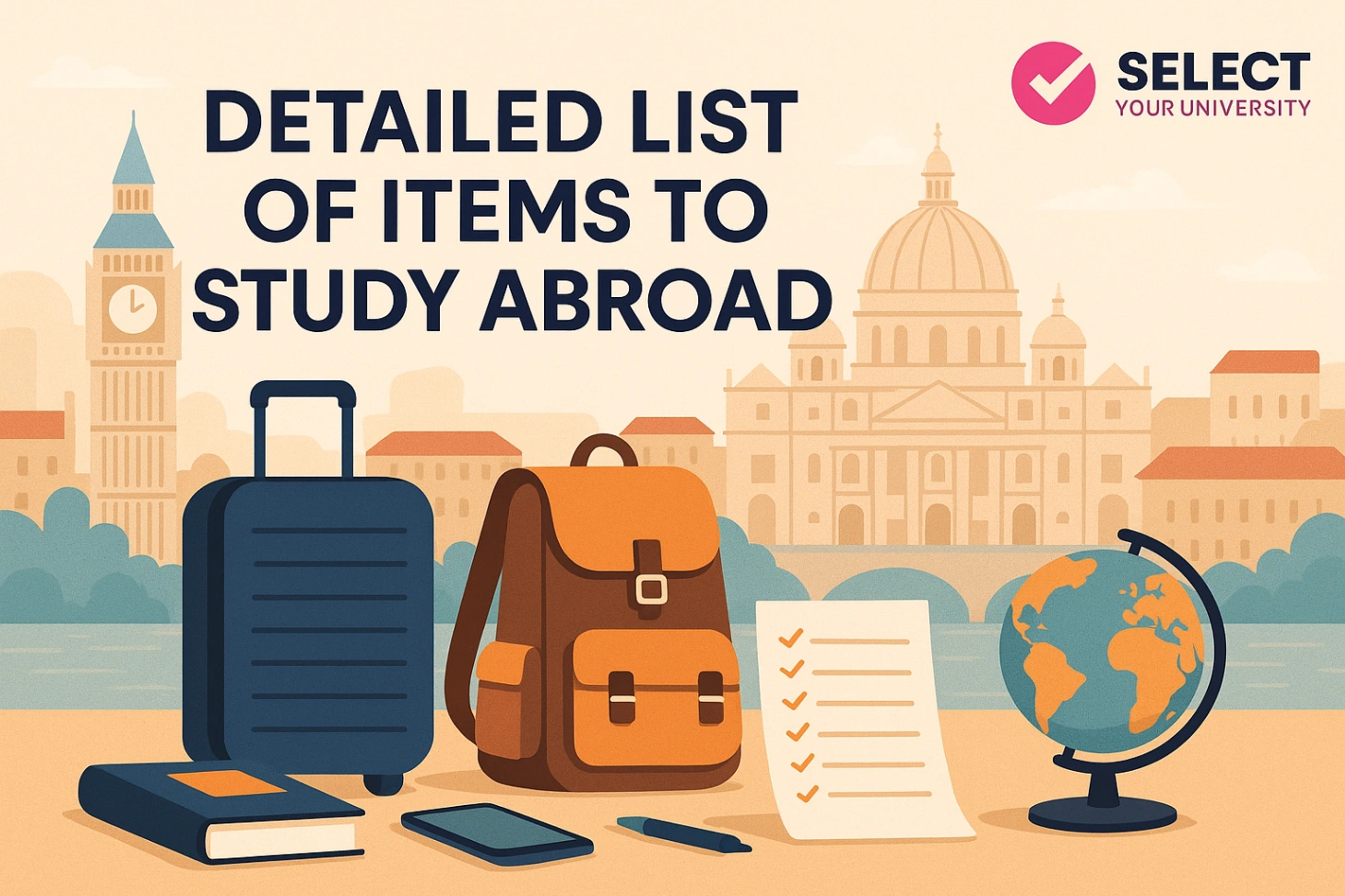 Detailed List of items to Study Abroad
If you are preparing for your study abroad journey, packing smart is the first and foremost step to a smooth and successful academic adventure. No matter whether you are heading to the USA, UK, Russia, Georgia, or Kazakhstan, creating a well-organized and structured packing checklist can save both your time and money. Here is a complete, easy-to-implement packing checklist of the essential items to pack for studying abroad in 2026.
☎️ Talk to an Expert Counsellor — FREE Call ☎️ |
|---|
Why Is a Study Abroad Packing Checklist Important?
A study abroad packing checklist is a valuable tool to stay organised, eliminate the chaos of packing, and ensure you don't forget to pack essential items for your trip. It also helps you optimise your baggage, save money and space, and be well prepared for a comfortable and convenient stay in a new country.
- Prevents last-minute stress and fear of forgetting important things
- Helps manage luggage weight and space
- Ensures you have all essentials for comfort and safety
- Saves money by avoiding unnecessary purchases abroad
How to Decide What to Pack for Studying Abroad?
Before you start packing, consider the following factors:
- Climate: Research the weather of your destination to pack suitable clothing.
- Cultural Norms: Respect local dress codes and traditions.
- Duration of Stay: Pack enough for your initial months; you can buy more later.
- University Requirements: Some courses may require specific equipment or attire.
- Luggage Restrictions: Check airline baggage policies.
Packing Hacks to Save Space
Knowing how to pack can help reduce the weight and volume of your suitcase. Here are some tips to fit more in.
- Roll clothes to eliminate wrinkles
- Use vacuum bags for bulky items
- Wear versatile items (mix & match outfits)
- Use packing cubes for better organization
- Place heavier items below the lighter items
Printable Study Abroad Packing Checklist
This will keep you organised and ensure that you don't forget anything before you leave. It also helps eliminate stress.

What are the Essential Documents Checklist 2026?
Organise and prepare all necessary documents for a stress-free study abroad experience, as they are needed at various points such as travel, immigration, and university admission.
Document | Details |
Passport | With a 6-month validity |
Student Visa | Printed and digital copies |
University Admission | Offer letter, enrollment confirmation |
Travel Tickets | Flight, train, or bus |
Insurance | Health and travel insurance |
Financial Proof | Bank statements, scholarship letters |
Medical Records | Vaccinations, prescriptions |
Passport Photos | 10 copies for various uses |
Emergency Contacts | Printed and digital copies |
Must-Have Items to Pack for Study Abroad
Certain items will make it easier to adapt to your new environment. Think about what you might need for study, living, and a bit of luxury, especially in the first few days of your trip. This will help you settle into your new surroundings and save you some money.
Clothing Essentials
Here are a few important clothing items you must carry to study abroad 2026.
- 7-10 casual outfits (jeans, t-shirts, tops)
- 1-2 formal outfits (for presentations/interviews)
- Weather-specific wear (jackets, thermals, raincoats, gloves, scarves)
- Undergarments and socks (2 weeks’ worth)
- Sleepwear and loungewear
- Workout clothes
- Comfortable walking shoes, sandals/flip-flops, and formal shoes
- Swimwear (if needed)
- Traditional/ethnic wear (for cultural events)
Pro Tip: Pack for layering and versatility.
Electronics & Gadgets
Electronic devices help you stay connected to your family and friends, stay on top of your academic work, and stay productive. Ensure your devices are compatible with the foreign electricity supply and have appropriate converters.
- Smartphone & charger
- Laptop & charger
- Universal power adapter
- Headphones
- Power bank
- USB drives/external hard drive
- Camera (optional)
- E-reader or Kindle (optional)
Toiletries & Personal Care
Toiletries and personal care products are essential for hygiene, particularly in the first few days. Bring travel-sized products to avoid bulky baggage, but most items can be found locally.
- Toothbrush, toothpaste
- Soap, shampoo, conditioner (travel-size for initial days)
- Deodorant, perfume
- Hairbrush/comb
- Shaving kit/razor
- Nail clippers, tweezers
- Feminine hygiene products
- Sunscreen & moisturizer
- Basic makeup kit
- Tissues, wet wipes, hand sanitizer
- Small first aid kit (band-aids, painkillers, allergy meds, etc.)
Academic Supplies
Academic supplies ensure you're ready for the first day of class. Notebooks, stationery, and course-specific supplies for a seamless start to classes.
- Backpack/daypack
- Notebooks, pens, stationery
- Calculator (if required)
- Course-specific materials (lab coat, stethoscope, etc.)
- Dictionary of language guide
Money and Exchange
Must have local currency and other payment methods.
- Local Currency (enough for a month)
- Debit/Credit Card (International preferred)
- Forex card
- Wallet
☎️ Talk to an Expert Counsellor — FREE Call ☎️ |
|---|
What Not to Pack for Study Abroad?
It's also important to think of what not to bring. This may result in extra charges and discomfort.
- Too many items of clothing or bulky winter items (can be bought there)
- Too many shoes or bulky items
- Too much food (can be prohibited at customs)
- Costly items or jewelry
- Anything banned by the airline or country
Mental & Emotional Preparation Tips Before You Go
Studying abroad is as much a mental as a physical journey. Moving to a new country means adjusting to a different culture, lifestyle and education system. Being emotionally prepared can help you adapt to challenging circumstances and enjoy the experience.
- Adapt to the new culture and way of life: Focus on enjoying the new food, language and culture instead of missing home.
- Stay connected with family and friends: Regular chats or calls can help you feel less homesick.
- Learn a few words of the new language: Learning a few words can help you communicate and increase your confidence.
- Try new activities: Join new groups, get to know new people and explore the city to learn more and adapt.
- Expect things won't always be easy but try to be positive: Be realistic and positive - things may not always be easy.
- Be prepared for homesickness: It's normal, and you can beat it by studying and doing other things.
- Make friends: Talk to your classmates, seniors or join clubs.
- Take care of yourself: Schedule activities, maintain a healthy diet, and find someone to talk to when you are stressed.
Country-Specific Packing Tips
Countries vary in climate, culture, and lifestyle. Country-specific packing will make your travel experience pleasant and allow you to adjust to the local environment more easily and save the expense of buying items on arrival.
- If you're heading to a cold destination (USA, Canada, Germany): Carry thermal underwear, jackets, gloves, woolen socks and insulated boots as the winter months are extremely long and cold. Layering is key to staying warm.
- Warm countries (Singapore, Malaysia, Australia): Pack light and breathable cotton clothes, sunglasses, and some sunscreens to help you get through the hot and humid weather.
- Europe: Pack some formal clothes, as well as casual clothes, as many universities require presentations, seminars, or even formal attire to be worn in class.
- Russia/Ukraine: It can be very cold in winter, so bring winter clothes like down jackets, thermals, hats, and gloves. You can buy some winter clothes there.
- Asia: In some countries, people prefer modest clothes due to cultural reasons, so carry comfortable clothing that will respect the culture.
- Middle East: Modest clothes are preferred, particularly in public and educational institutes, so carry clothes with full sleeves and avoid tight-fitting clothes.
- UK & Ireland: Weather conditions can be unpredictable, so pack light, layered clothes, raincoats, and umbrellas, to be ready for drizzle and temperature changes.
- Australia & New Zealand: Seasons are opposite to those in India, so check the start of the course and pack accordingly (summer and light winter clothes).
Special Tips for Indian Students
Some special tips given by the SYU experts to the students are given below.
- Pack some ready-to-eat food, masalas, and a small pressure cooker if allowed.
- Carry extra passport photos and copies of important documents.
- Download essential apps (maps, translation, university portal).
- Keep emergency contact numbers ready.
- Keep some extra cash for emergency
Sample Packing Timeline for Indian Students 2026
Having a packing timeline ensures you're well prepared and don't rush at the last moment. This approach ensures all paperwork and packing is done in a timely and efficient manner.
1 Month before | 2 Week before | 1 week before | 1 day before |
Start list, check docs | Shop essentials, scan docs | Pack main bag | Final check, pack snacks |
Book tickets, insurance | Test electronics | Pack hand luggage | Charge devices, lock bags |
That’s it about the checklist. You can paste it in your notebook, iPad, or wherever you wish to put it on. Of course, you may not go with all the things mentioned here and there must be something more based on your requirements. However, these were the significant international student packing list items that must be included in your primary checklist of the things you should carry for moving abroad for your studies.
☎️ Talk to an Expert Counsellor — FREE Call ☎️ |
|---|
Frequently Asked Questions
Ques. What are the most important documents to carry while studying abroad?
Ans. You need to take all the required documents while studying overseas. This includes your passport, student visa, offer letter, transcripts, travel insurance and ID card. You will also need to make copies and backups of these. You will need these for border control, university registration and accommodation, so make sure to keep track of them.
Ques. How many clothes should I pack for studying abroad?
Ans. You should pack clothes according to the weather conditions and how long you are staying. Include basic, casual and formal clothes, and seasonal wear like jackets or shorts. Avoid overpacking as you can purchase clothing on your trip. Planning outfits in layers, and mixing and matching avoids the need to take many things.
Ques. What electronics are necessary for students going abroad?
Ans. Students need a laptop for studies, a mobile phone for calls and messages, adapters, a power bank, and a charger. Headphones may be required for online classes and travelling. Check that devices are compatible with the country's voltage to avoid damage and malfunctions.
Ques. Should I carry toiletries or buy them abroad?
Ans. It is advised to take necessary toiletries like a toothbrush, shampoo, soap and other personal items for the initial days. But toiletries are readily available overseas, so you do not need to bring too much. But it's best to travel with lighter items and will be enough for the first few days.
Ques. Is it necessary to carry medicines while studying abroad?
Ans. Yes, it's important to take medicines (especially for specific health conditions). Bring medicines, first aid items, and over-the-counter medicines like cold and pain relievers. Make sure medicines are in their original packaging and check to see if they are legal to take to the country you are visiting to avoid issues with customs, and while you're in the country.
Ques. What kind of shoes should I pack for studying abroad?
Ans. It's best to pack comfortable and functional shoes for your destination. Bring athletic shoes, one dressy pair and shoes for the weather (snow boots for cold climates and sandals for hot climates). Don't bring too much because it will take up room in your suitcase, and buy shoes when you arrive.
Ques. How can I manage luggage space effectively?
Ans. To save space in your luggage, use packing hacks like rolling clothes, vacuum storage bags and packing cubes to keep items separate. Opt for multi-purpose items and avoid overpacking. Organise packing and weight to meet airline weight limits.
Ques. Should I carry food items while going abroad?
Ans. You can carry some pre-cooked or packaged food items or snacks for the initial few days. But check with the country you are travelling to as some things might be prohibited. It's a good idea to avoid bringing fresh foods and do your shopping at your destination.
Ques. What miscellaneous items are useful for studying abroad?
Ans. Miscellaneous items include a backpack, locks, water bottles, notepads, sunglasses and a diary. They help with life and travel. It's good to have a few basics to avoid being ill-prepared.
Ques. How can I ensure I don’t forget anything while packing?
Ans. The easiest way to avoid forgetting anything is to create a list. Divide the list into categories like documents, clothing, electronics and other. Then mark it off as you put the items in your suitcase. This approach will prevent the last-minute stress and panic, and prepare you for your journey.