



JEE Advanced 2026 Eligibility Criteria - Check Age Limit, Marks Required, No of Attempts, Important Factor
Joint Entrance Examination Advanced
JEE Advanced Eligibility Criteria Overview 2026
The Joint Entrance Examination Advanced 2026 will be conducted by the seven Zonal Coordinating IITs under the guidance of the Joint Admission Board 2026 (JAB 2026). Admission to the undergraduate Bachelor, Integrated Masters, and Dual Degree (entry at the 10+2 level) programs will be based on the performance of the candidate in JEE (Advanced) 2026 in all the IITs in the academic year 2026-27. The JAB 2026 decisions made will be final in the questions related to do with JEE (Advanced) 2026 and admissions to IITs in the 2026-27 academic year.
Reservation of Seats for IIT Admissions
Reservation of Seats for IIT Admissions has been mentioned below in a tabular format.
Category | Reservation Percentage |
General (GEN) | Remaining seats |
General – Economically Weaker Section (GEN-EWS) | 10% |
Other Backward Classes – Non-Creamy Layer (OBC-NCL) | 27% |
Scheduled Caste (SC) | 15% |
Scheduled Tribe (ST) | 7.5% |
Persons with Disabilities (PwD) | 5% (Horizontal reservation) |
Important Notes
- Genres reservation (5%) horizontal and applicable to all categories ( GEN, GEN-EWS, OBC-NCL, SC and ST).
- The policies on reservation are in accordance with the Government of India norms.
- Seat allotment in JoSAA counselling is done on the basis of category and JEE (Advanced) rank and qualification.
Joint Entrance Examination Advanced
JEE Advanced 2026 Eligibility
The applicants have to satisfy all the requirements before proceeding with the application process for the JEE Advanced Exam 2026. The following table is a summary of the requirements of the JEE Advanced Exam Eligibility and Preparation by NTA.
Eligibility Parameter | Eligibility Condition (JEE Advanced) |
Age Limit | Candidate must be born on or after 1 October 2001. SC/ST/PwD candidates get 5 years relaxation (born on or after 1 October 1996). |
Qualifying Exam | Must have qualified JEE (Main) 2026 and be among the top 2,50,000 candidates in B.E./B.Tech paper. |
Year of Passing | Must have appeared for Class 12 (or equivalent) for the first time in 2025 or 2026. |
Subjects in Qualifying Exam | Physics, Chemistry, and Mathematics must be compulsory subjects in Class 12. |
Class 12 Percentage Criteria | No minimum percentage required to appear in JEE Advanced (separate criteria may apply during IIT admissions). |
Number of Attempts | Maximum 2 attempts in 2 consecutive years. |
Joint Entrance Examination Advanced
JEE Advanced 2026 Syllabus PDF
The JEE Advanced 2026 Syllabus is discussed below.
Chemistry Syllabus
Here are the Chemistry syllabus details for JEE Advanced 2026.
Section | Topics |
Physical Chemistry | General Topics; States of Matter; Atomic Structure; Chemical Bonding; Thermodynamics; Equilibrium; Electrochemistry; Chemical Kinetics; Solid State; Solutions; Surface Chemistry |
Inorganic Chemistry | Classification of Elements & Periodicity; Hydrogen; s-Block Elements; p-Block Elements; d-Block Elements; f-Block Elements; Coordination Compounds; Isolation of Metals; Qualitative Analysis; Environmental Chemistry |
Organic Chemistry | Basic Principles of Organic Chemistry; Alkanes; Alkenes & Alkynes; Benzene; Phenols; Alkyl Halides; Alcohols; Ethers; Aldehydes & Ketones; Carboxylic Acids; Amines; Haloarenes; Biomolecules; Polymers; Chemistry in Everyday Life; Practical Organic Chemistry |
Mathematics Syllabus
Here are the Mathematics syllabus details for JEE Advanced 2026.
Unit | Topics |
Sets, Relations & Functions | Sets, Relations, Functions |
Algebra | Complex Numbers, Quadratic Equations, Progressions, Logarithms, Permutations & Combinations, Binomial Theorem |
Matrices | Matrices, Determinants, Linear Equations |
Probability & Statistics | Probability, Statistics |
Trigonometry | Trigonometric Functions, Inverse Trigonometry |
Analytical Geometry | Straight Line, Circle, Conic Sections, 3D Geometry |
Differential Calculus | Limits, Continuity, Differentiation |
Integral Calculus | Integration, Differential Equations |
Vectors | Vectors and Vector Algebra |
Physics Syllabus
Here are the Physics syllabus details for JEE Advanced 2026.
Unit | Topics |
General | Units & Dimensions, Measurement & Error Analysis, Least Count, Significant Figures, Experiments (Vernier calipers, Screw Gauge, Pendulum, Young’s Modulus, Surface Tension, Calorimetry, Optics, Sound, Ohm’s Law, Meter Bridge) |
Mechanics | Kinematics, Newton’s Laws, Friction, Work, Energy & Power, Momentum, Rigid Body Dynamics, Rotational Motion, Oscillations, Gravitation, Fluid Mechanics, Wave Motion |
Thermal Physics | Thermal Expansion, Calorimetry, Heat Transfer, Ideal Gas Laws, First & Second Laws of Thermodynamics, Blackbody Radiation |
Electricity & Magnetism | Coulomb’s Law, Electric Field & Potential, Gauss’s Law, Capacitance, Electric Current, Ohm’s Law, Kirchhoff’s Laws, Heating Effect, Biot–Savart & Ampere’s Law, Magnetic Effects, Electromagnetic Induction, AC/DC Circuits |
Electromagnetic Waves | Electromagnetic Waves, Spectrum, Uses |
Optics | Reflection & Refraction, Lenses & Mirrors, Magnification, Interference, Diffraction, Polarization |
Modern Physics | Atomic Nucleus, Radioactivity, Fission & Fusion, Photoelectric Effect, Bohr Model, X-rays, de Broglie Waves |
Joint Entrance Examination Advanced
JEE Advanced 2026 Preparation Tips
1. Start With NCERT & Syllabus
Use NCERT textbooks to develop solid foundations in Physics, Chemistry, and Mathematics.
Master the full syllabus of the JEE Advanced and proceed to problem-level issues.
2. Plan & Schedule
Make a study plan per week, dividing all subjects into three.
Time allocation according to your weaknesses and strengths, and ensure that you balance your revision and new knowledge.
3. Mock Tests & Past Papers
Practice full-length mock tests regularly to gain effectiveness in time management and accuracy.
Compare your results with every test in order to see where you are weak.
The practice of JEE Advanced papers of past years helps to learn the patterns of questions.
4. Revise Consistently
The most important thing is to revise, repeat significant formulas, reactions and ideas several times.
Have brief revision notes and formula sheets, so that you can recite them quickly.
5. Maintain Balance & Health
Have a healthy practice of having a balance in sleep and study intervals.
Long continuous hours with no breaks are prohibited because short training intervals are more effective in retention.
6. Use Quality Study Material
Do not use too many books, select a few reference books of standard and follow them.
You can pay attention to problem-solving books and your coaching material in case you are enrolled.
7. Seek Guidance When Needed
Ask teachers, mentors or peers to explain challenging concepts.
You can organise your preparation with the help of coaching or online guidance.
Joint Entrance Examination Advanced
Latest News
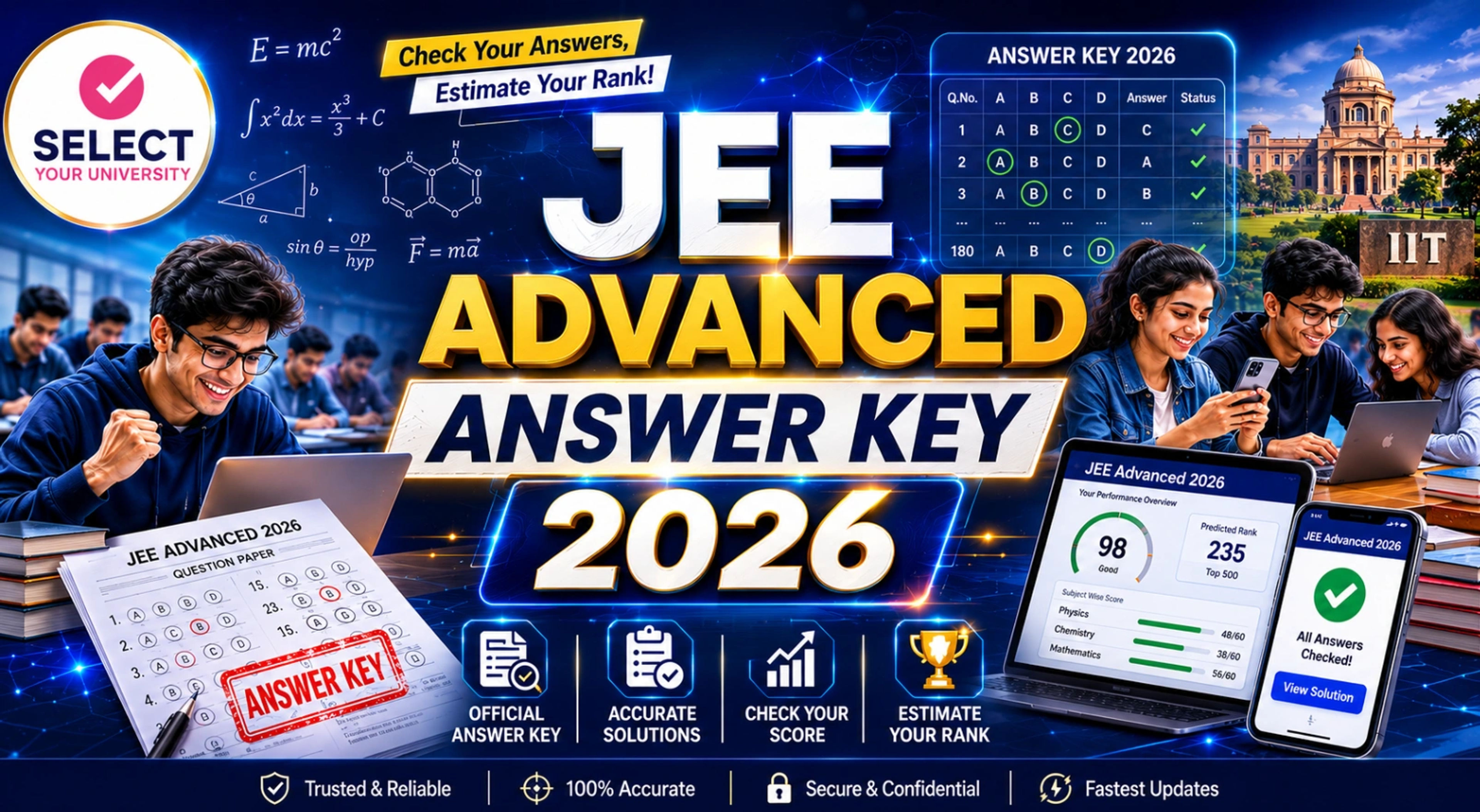
JEE Advanced Answer Key 2026 Released by IIT Roorkee at jeeadv.ac.in
Jyoti • 1 Mins read • 24 May 26
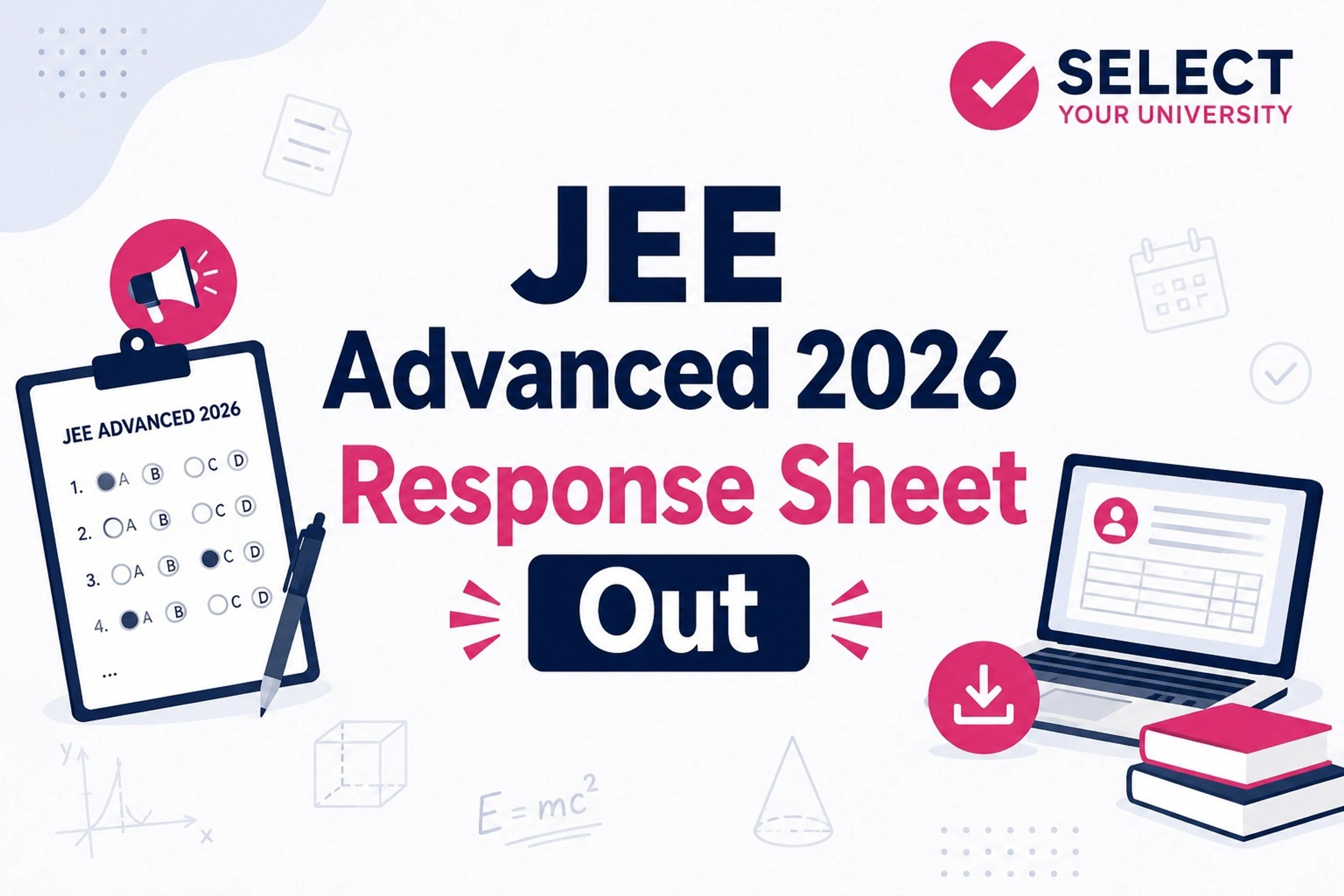
JEE Advanced 2026 Response Sheet Released at jeeadv.ac.in; Download PDF Here
Pragati Srivastava • 1 Mins read • 20 May 26
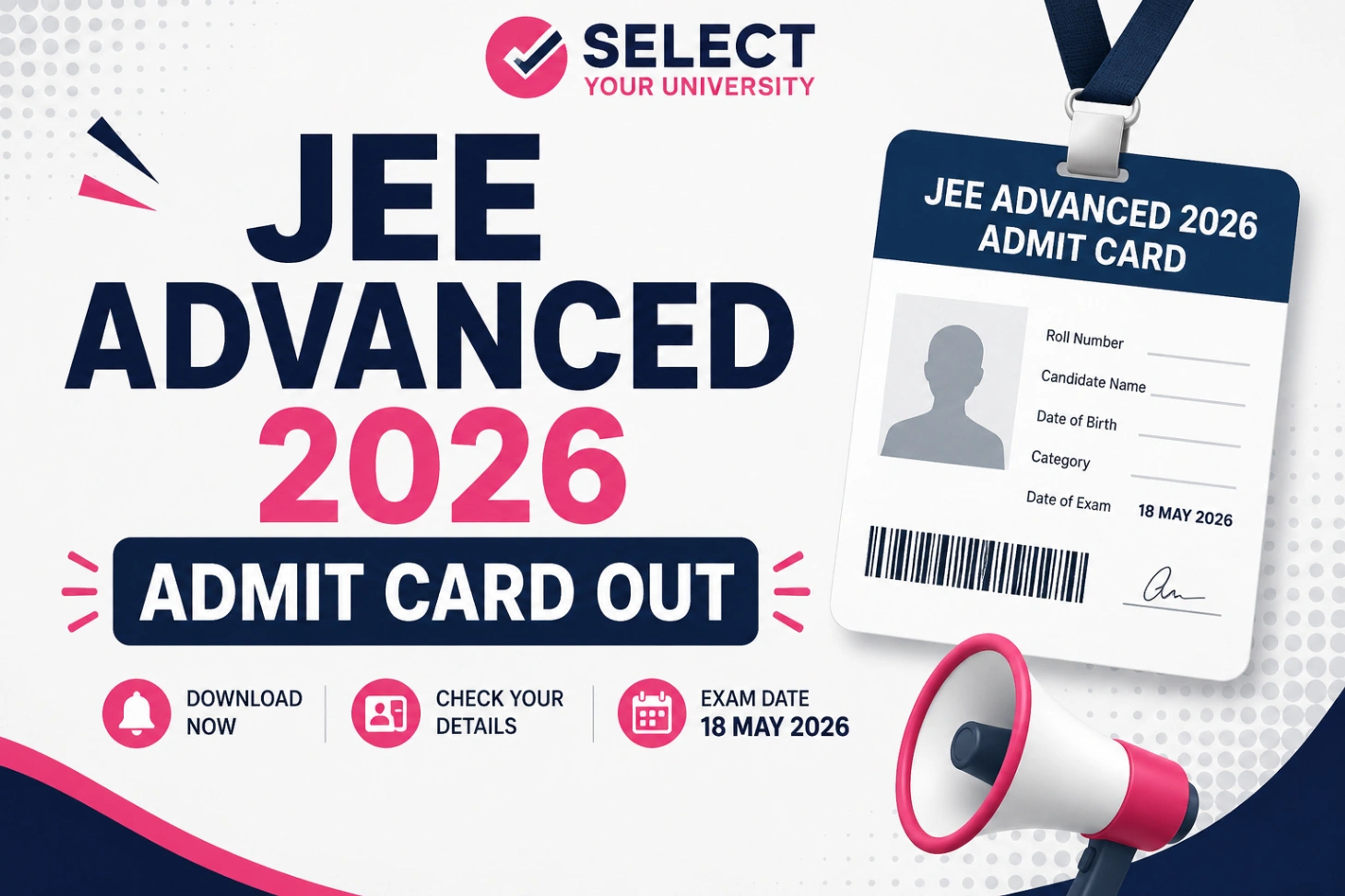
JEE Advanced 2026 Admit Card Released at jeeadv.ac.in; Download Hall Ticket Here
Pragati Srivastava • 1 Mins read • 10 May 26

JEE Advanced 2026 Registration Begins: Exam Date, Schedule, Fees & Details
Pragati Srivastava • 1 Mins read • 1 Jan 26
Joint Entrance Examination Advanced

Not sure what you are looking for? Connect with our counsellors.
Login helps you find curated results for your requirement.